“Always Learning, Always Improving”
Cross
“Always Learning, Always Improving” | “கற்றது கைமண் அளவு, கல்லாதது உலகளவு” | “What you have learned is a mere handful of sand, but what you haven’t learned is the size of the world.”
“Love the Lord your God with all your heart and with all your soul and with all your strength.”
VeeraTechVerse Logo
VEERAKUMAR
Technology • Trading • Spirituality • History

 Introduction to Big Data:

  • Write about what Big Data is, its importance, and its applications in various industries.

Introduction to Big Data: Transforming the Modern World

In today’s digital age, the amount of data generated every second is staggering. From social media interactions to online shopping transactions, from GPS navigation to IoT devices, data is being created at an unprecedented scale. This explosion of data has led to the emergence of a transformative field known as Big Data.

What is Big Data?

Big Data refers to extremely large and complex datasets that traditional data processing tools and techniques cannot handle efficiently. It encompasses structured, semi-structured, and unstructured data that grows rapidly in volume, variety, and velocity. These are often referred to as the 3 Vs of Big Data

  1. Volume: The massive amount of data generated every second (e.g., terabytes to petabytes of data).

  2. Velocity: The speed at which data is generated and processed (e.g., real-time analytics).

  3. Variety: The diverse types of data (e.g., text, images, videos, and sensor data).

     Importance of Big Data

    Big Data is not just about the data itself but about the ability to analyze and derive actionable insights from it. Here’s why Big Data is essential:

    • Improved Decision-Making: Organizations can make data-driven decisions by analyzing historical and real-time data.

    • Enhanced Customer Experience: Personalizing services and recommendations based on customer behavior.

    • Operational Efficiency: Streamlining operations, predicting maintenance needs, and optimizing resources.

    • Big Data is transforming industries worldwide. Here are some notable applications:

Competitive Advantage: Gaining insights into market trends and staying ahead of competitors.

Applications of Big Data Across Industries

Healthcare:

Analyzing patient data for predictive diagnostics and personalized treatments.
Tracking disease outbreaks and improving public health responses.


Finance:
Detecting fraudulent transactions using real-time analytics.
Enhancing investment strategies with algorithmic trading and market analysis.

Retail:
Optimizing inventory and supply chains.
Delivering personalized recommendations to customers.
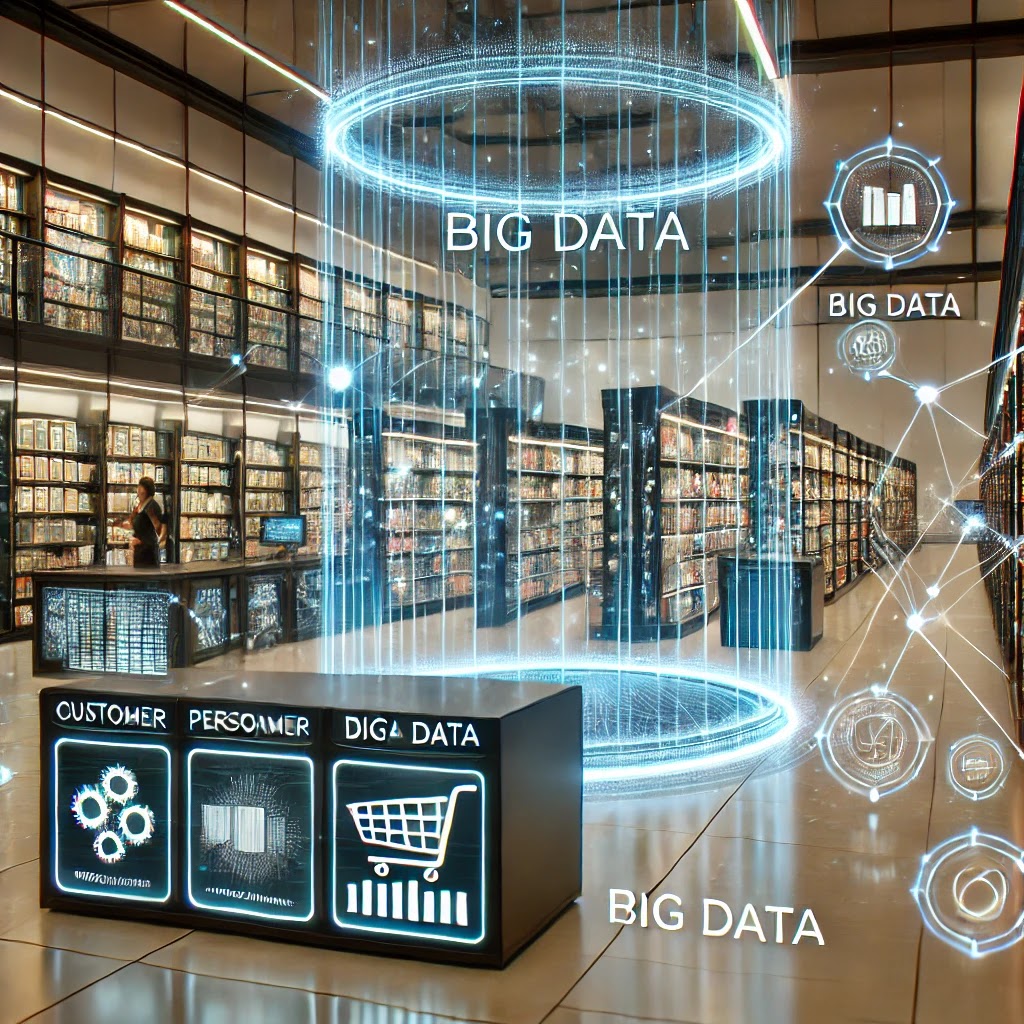


Transportation:
Managing traffic flow and reducing congestion with real-time data from GPS and sensors.
Optimizing logistics and fleet management.

Entertainment:
Recommending content on streaming platforms like Netflix based on viewing history.
Analyzing social media trends to create engaging content.

Agriculture:
Using data from sensors to monitor soil conditions, weather patterns, and crop health.
Optimizing water usage and maximizing yields with precision farming.

Government:
Enhancing public safety with predictive policing.
Improving urban planning with insights from smart city data.

It may look funny but it is true DBA VS TOMATO

I paid around INR150 for 1 KG of Tomato (current  market price may differs other states of india or country )

What is the price of 1 KG Tomato in your area?
current  market price may differs other states of india or country
---------------------------------------------------
Tomatoes serve as a source of essential vitamins, minerals, and antioxidants in a diet. They add flavor, texture, and color to various culinary preparations.
In contrast, a DBA's primary function is to design, implement, and manage databases, ensuring data integrity, performance, and availability for organizations or applications relying on data storage and retrieval.

Tomato helps to improve immunity
DBA helps to improve Database Performance
DBA Vs Tomato 😂 😂
 text content copy cat,design its mine


"Always On Availability Groups: Essential DBA Scripts for Monitoring and Checking SQL Server High Availability"


Check Availability Group Health:
SELECT
    ag.name AS [Availability Group],
    ar.replica_server_name AS [Replica Server],
    adc.database_name AS [Database],
    ags.is_local AS [Is Local],
    ags.is_primary_replica AS [Is Primary]
FROM
    sys.availability_groups AS ag
    INNER JOIN sys.dm_hadr_availability_replica_states AS ars
        ON ag.group_id = ars.group_id
    INNER JOIN sys.dm_hadr_availability_replica_cluster_states AS arcs
        ON ars.group_id = arcs.group_id
           AND ars.replica_id = arcs.replica_id
    INNER JOIN sys.dm_hadr_database_replica_cluster_states AS adc
        ON arcs.group_id = adc.group_id
           AND arcs.replica_id = adc.replica_id
    INNER JOIN sys.availability_group_listeners AS agl
        ON ag.group_id = agl.group_id
    INNER JOIN sys.dm_hadr_availability_replica_states AS ags
        ON ags.replica_id = ars.replica_id
WHERE
    ars.is_local = 1;
This script provides an overview of the availability group health, including the availability group name, replica server name, database name, and whether the replica is the primary replica or not.
 
Check Data Synchronization:
SELECT
    ag.name AS [Availability Group],
    d.name AS [Database],
    drs.synchronization_state_desc AS [Synchronization State],
    drs.synchronization_health_desc AS [Synchronization Health]
FROM
    sys.availability_groups AS ag
    INNER JOIN sys.dm_hadr_database_replica_states AS drs
        ON ag.group_id = drs.group_id
    INNER JOIN sys.databases AS d
        ON drs.database_id = d.database_id;
This script shows the synchronization state and health of the databases within the availability group. It provides information on whether the data is synchronized or if there are any synchronization issues.
Check Availability Group Listener:
SELECT
    ag.name AS [Availability Group],
    agl.dns_name AS [Listener DNS Name],
    agl.port AS [Listener Port],
    agl.state_desc AS [Listener State]
FROM
    sys.availability_groups AS ag
    INNER JOIN sys.availability_group_listeners AS agl
        ON ag.group_id = agl.group_id;
This script displays the availability group name, listener DNS name, port, and the state of the availability group listener.
Check Failover Readiness:
SELECT
    ag.name AS [Availability Group],
    drs.database_id AS [Database ID],
    d.name AS [Database],
    drs.is_failover_ready AS [Is Failover Ready]
FROM
    sys.availability_groups AS ag
    INNER JOIN sys.dm_hadr_database_replica_states AS drs
        ON ag.group_id = drs.group_id
    INNER JOIN sys.databases AS d
        ON drs.database_id = d.database_id;


SQL scripts that may be helpful for MS SQL Server DBAs in their daily tasks:

 SQL scripts that may be helpful for MS SQL Server DBAs in their daily tasks:

1.Script to Backup a Database:

BACKUP DATABASE [YourDatabaseName]

TO DISK = 'C:\Backup\YourDatabaseName.bak'

WITH INIT, FORMAT, COMPRESSION;

2.Script to Restore a Database:

RESTORE DATABASE [YourDatabaseName]

FROM DISK = 'C:\Backup\YourDatabaseName.bak'

WITH REPLACE, RECOVERY;

3.Script to Check Database Integrity:

DBCC CHECKDB ('YourDatabaseName') WITH NO_INFOMSGS;

Script to Shrink Transaction Log File:

DBCC SHRINKFILE ('YourDatabaseName_log', 1);

SELECT

    r.session_id,

    r.start_time,

    r.status,

    r.command,

    t.text AS [SQL Text]

FROM

    sys.dm_exec_requests r

    CROSS APPLY sys.dm_exec_sql_text(r.sql_handle) t

WHERE

    r.status NOT IN ('background', 'sleeping')

ORDER BY

    r.start_time DESC;

4..Script to Grant Permissions to a User:

USE [YourDatabaseName]

GO

GRANT SELECT, INSERT, UPDATE, DELETE ON [YourSchema].[YourTable]

TO [YourUserName];

5.Script to Update Statistics for a Table:

USE [YourDatabaseName]

GO

UPDATE STATISTICS [YourSchema].[YourTable];


CLOUD COMPUTING

 CLOUD COMPUTING 

Cloud computing has revolutionized the way businesses and individuals approach technology infrastructure and services. In today's digital age, where data storage, processing power, and software applications play a critical role in our daily lives, cloud computing offers a flexible and scalable solution. By leveraging remote servers and networks accessed through the internet, cloud computing enables users to store, manage, and access data and applications seamlessly from anywhere in the world. In this blog post, we will explore the fundamental concepts of cloud computing, its benefits, and its impact on various industries, as well as address common misconceptions to help you understand why cloud computing has become an essential component of modern-day technology strategies."


VeeraTechVerse — Technology, Data Engineering, Trading, Spirituality, World & Evolution, History and lifelong learning. _V€€RAKUMAR AKKINI

Mastering SQL Server

Search This Blog

Powered by Blogger.

Mastering SQL Server


Translate

Advanced NIFTY Options Concepts for Beginners

  Advanced NIFTY Options Concepts for Beginners 1. Introduction After learning the basics of Call Options, Put Options, technical analysis a...